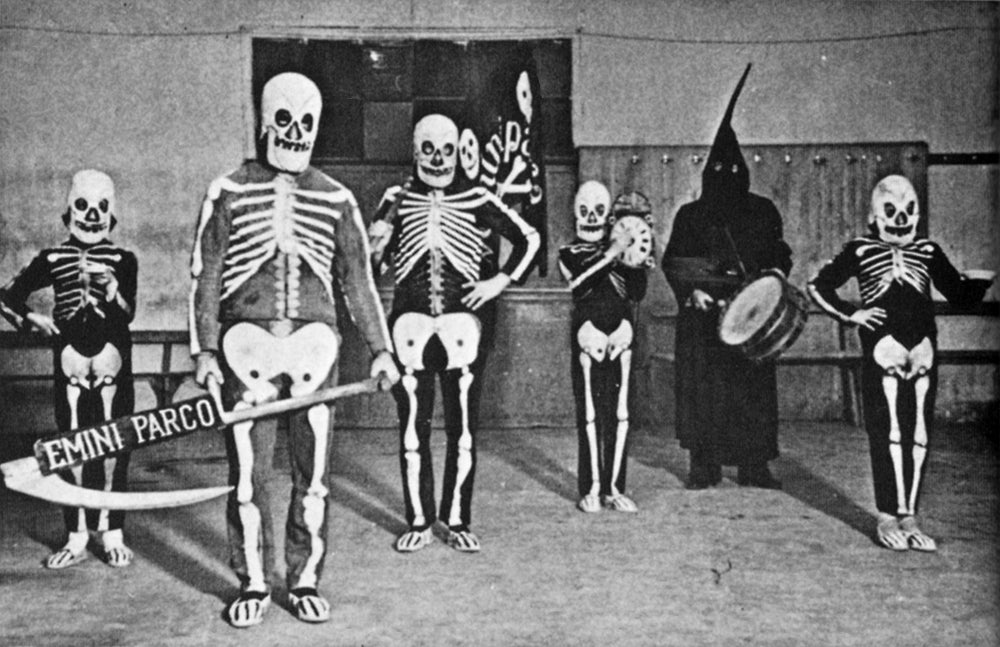
Characters from the Dance of Death by Verges
Each character in Verges' Dance of Death has a role and a symbol that reminds us of the inevitable destiny we all share. This section details who they are and what they represent in this ancient tradition.

The scythe
The The Headbanging, popularly known as La Dalla, leads and guides the entire Verges Dance of Death. He is the most experienced dancer, as his role is key: he sets the pace, controls the space and distance between himself and the other members, and decides when to accelerate or brake depending on the conditions of the dance. His characteristic movement is to perform a complete rotation on his axis with each step, advancing with his back to the direction of the dance and always with a rigid body, without any movement of his arms or legs, to maintain balance while holding the scythe.
Function within Dance
- Sets the direction, rhythm, and space of the Dance.
- Constantly observes its surroundings to adjust its pace.
- Serves as a reference for all other skeletons.
Characteristic movement
- 360° rotation on its own axis with each step.
- Body completely static except for the turning motion.
- Holds the scythe with both hands: the right hand at waist level and the left hand slightly higher, simulating the reaper's gesture.
Symbolism
- The scythe is the quintessential instrument used to represent Death.
It is a symbol of the end of life and represents the universality of death: no one can escape its grip. - It is engraved with the Latin phrase "Nemini Parco": "I spare no one", highlighting the implacability of death.
The flag
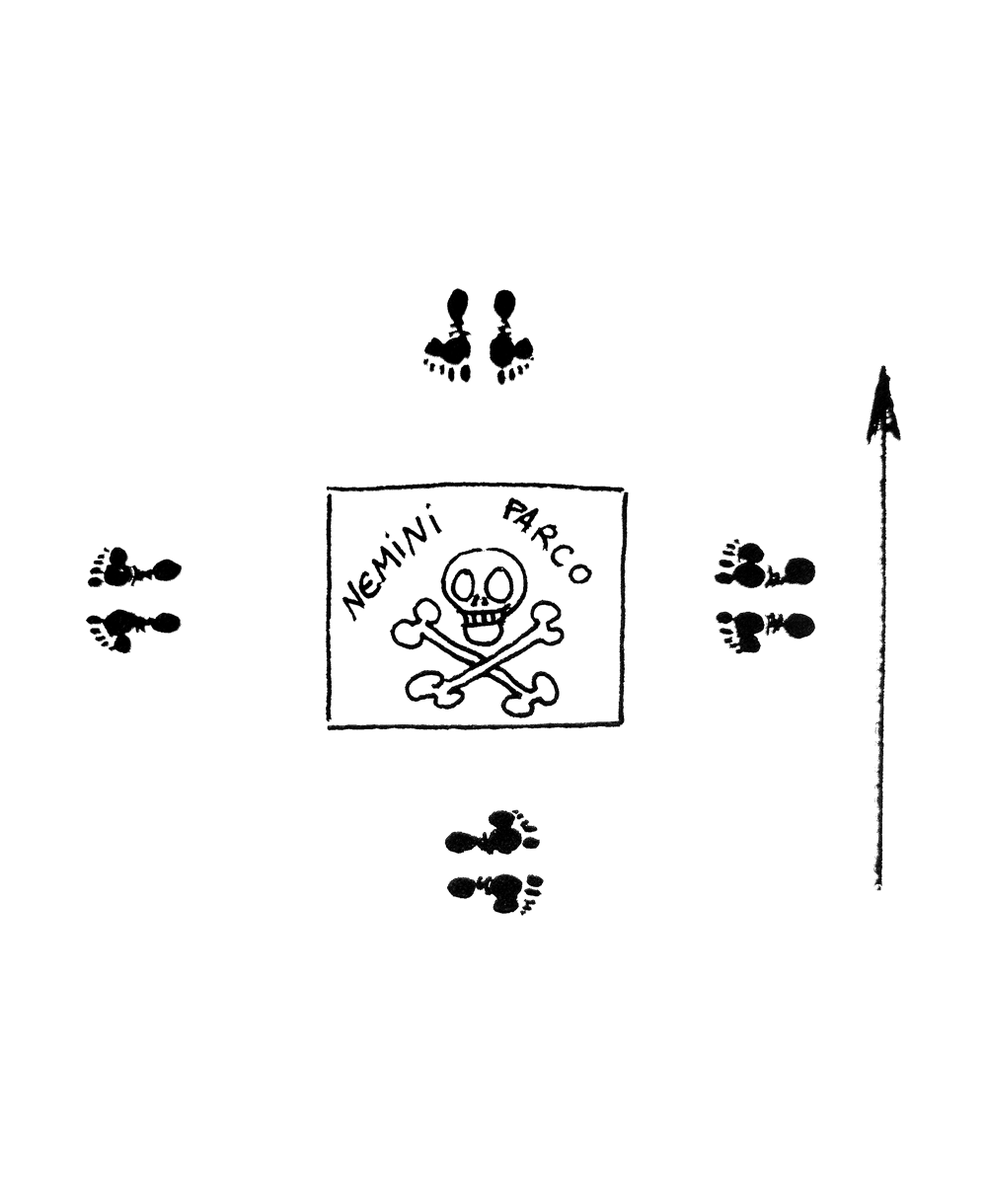
The Flag Bearer occupies the center of the Dance. He carries the black flag, which marks the constant point of reference for the group's movement. He has a fundamental role: ensuring that the dance maintains its structure and proportions. His every movement helps maintain the symmetry of the cross that the dance draws in space.
Function within Dance
- Serves as a central point of reference for all the other dancers.
- Helps correct imbalances and maintain group unity.
Characteristic movement
- Half turn on its axis with each step, alternating direction.
- Flag movement synchronized with the turns.
Symbolism
- The Flag has a black background with the inscription "Nemini Parco" and a skull and crossbones. Sometimes it also features the inscription "Time is short".
- It represents the absolute sovereignty of death over all living things.
- The black, the skull, and the motto reinforce the idea of the universality of the end.
The saucers
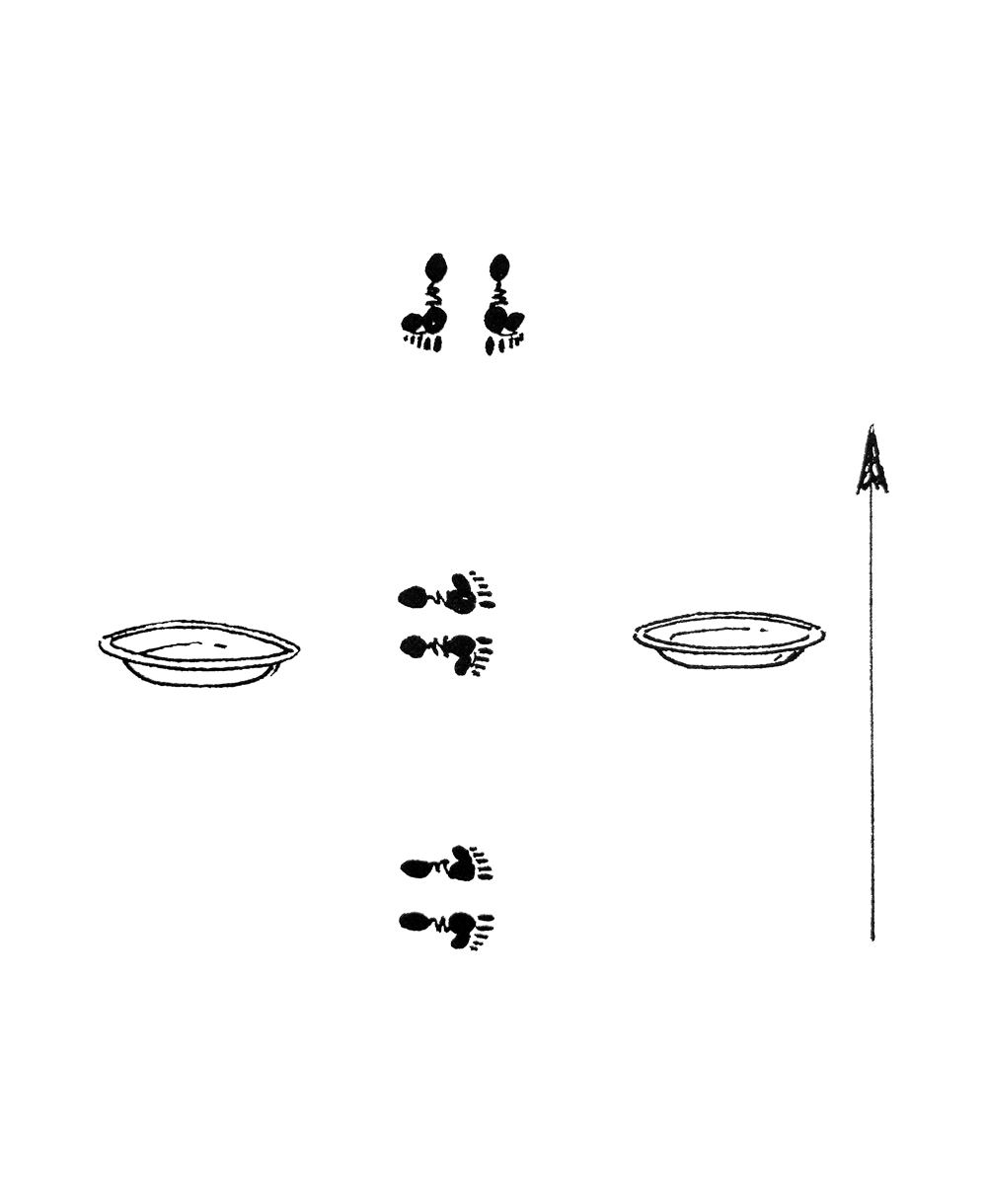
The Saucers are the small dancers who occupy the lateral positions of the Dance. They are twins in the painting, both in age and symbolism. Each carries a plate filled with ashes, simulating the dust to which we inevitably return.
Function within Dance
- They form the lateral arms of the dance's visual cross.
- They must follow the rhythm exactly and maintain the dance's proportions.
Characteristic movement
- Alternating half-turn movement with each step.
- Symbolic gesture with the plate with each turn, showing the ash to the audience.
Symbolism
- The Saucer with Ashes represents the decomposition of the human body: “We are dust and to dust we shall return.”
- Ashes are a direct reminder of the brevity and fragility of life.
The Clock
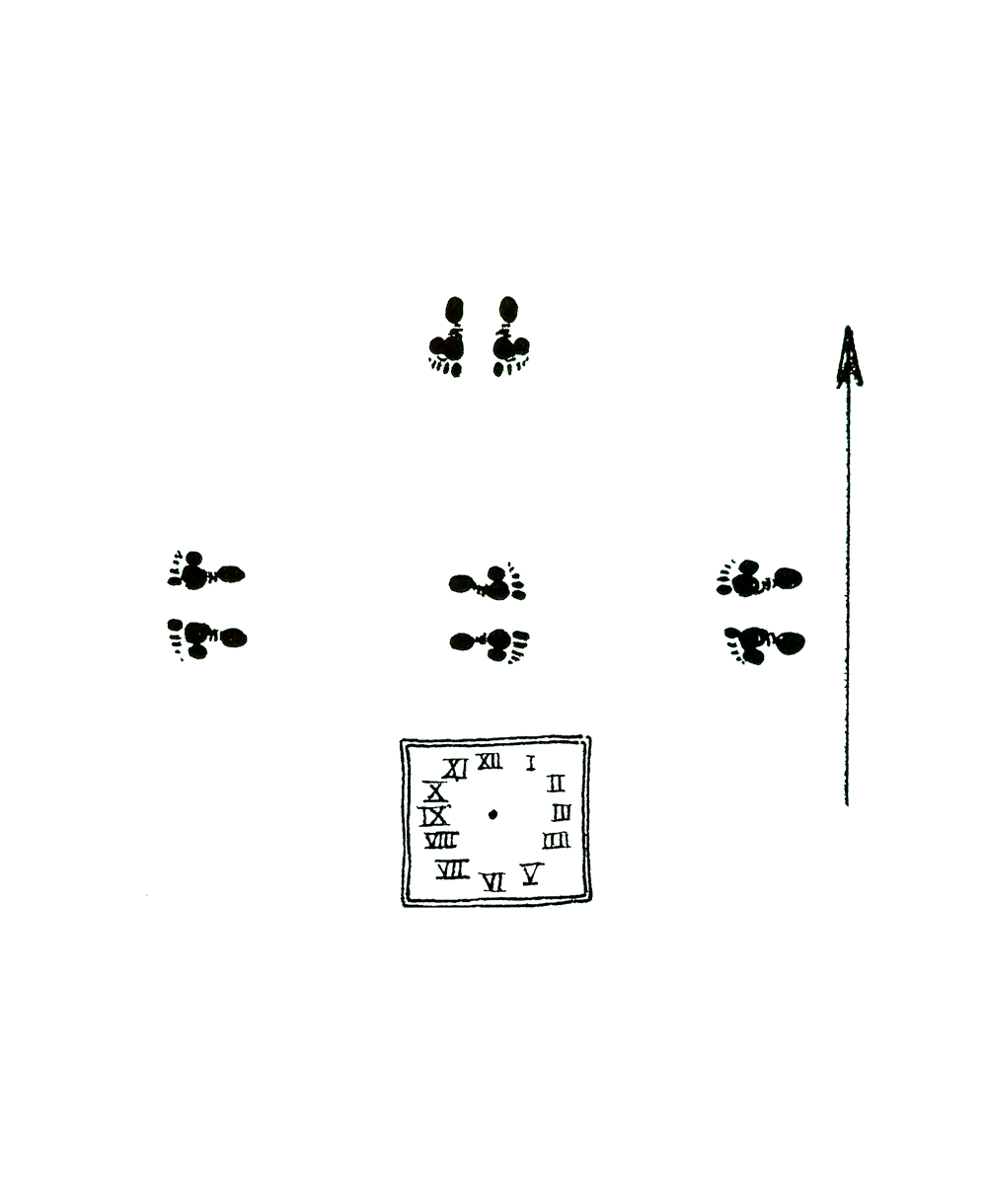
The Clock is the skeleton that completes the Dance formation. A child carries this symbol, reminding us that death can come at any moment, without warning.
Function within Dance
- It has no guiding function; it simply follows the rhythm of the dance.
- With a small gesture, it marks an arbitrary time during the dance.
Characteristic movement
- Alternating half-turn movement with each step.
- Occasionally, point to a fictitious time on the clock.
Symbolism
- A square clock, which shows no time, symbolizes the uncertainty of the final moment.
- The inexorable passage of time and the unpredictability of death.
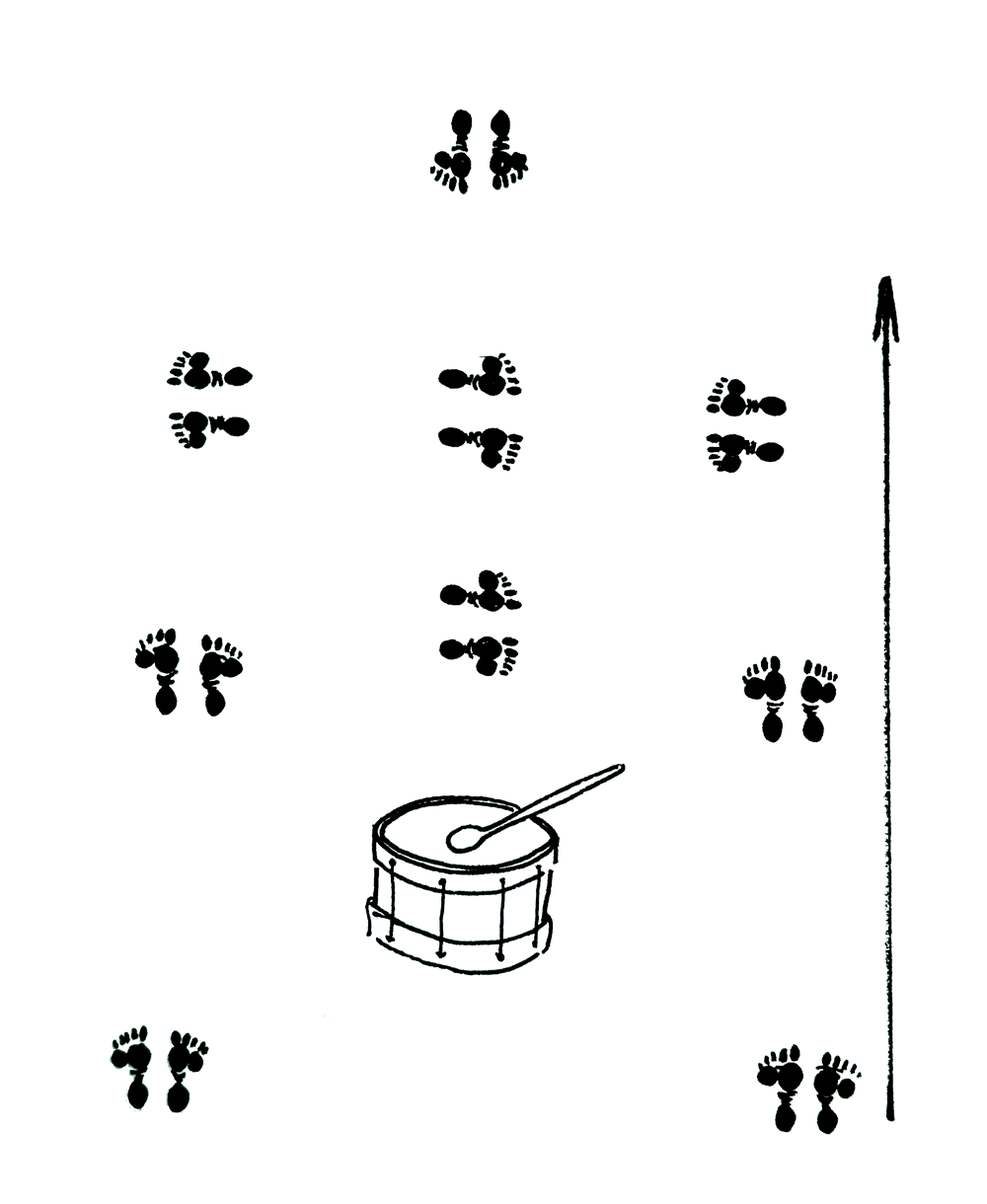
The drum
The Drum is the one who brings the Dance to life. He's not part of the group of leaping skeletons, but he's the soul of the rhythm. He keeps time with dry, deep beats that resonate throughout the village.
Function within Dance
"
- It sets the rhythm for the entire dance movement.
- It has the ability to stop the dance or restart it if necessary.
Characteristic movement
- Three taps: one long and two short, marking the jumping rhythm.
Symbolism
"
- A large, deep-sounding drum, perfectly suited to the solemn character of the Dance of Death.
- The heartbeat of life, inexorably moving toward its end.
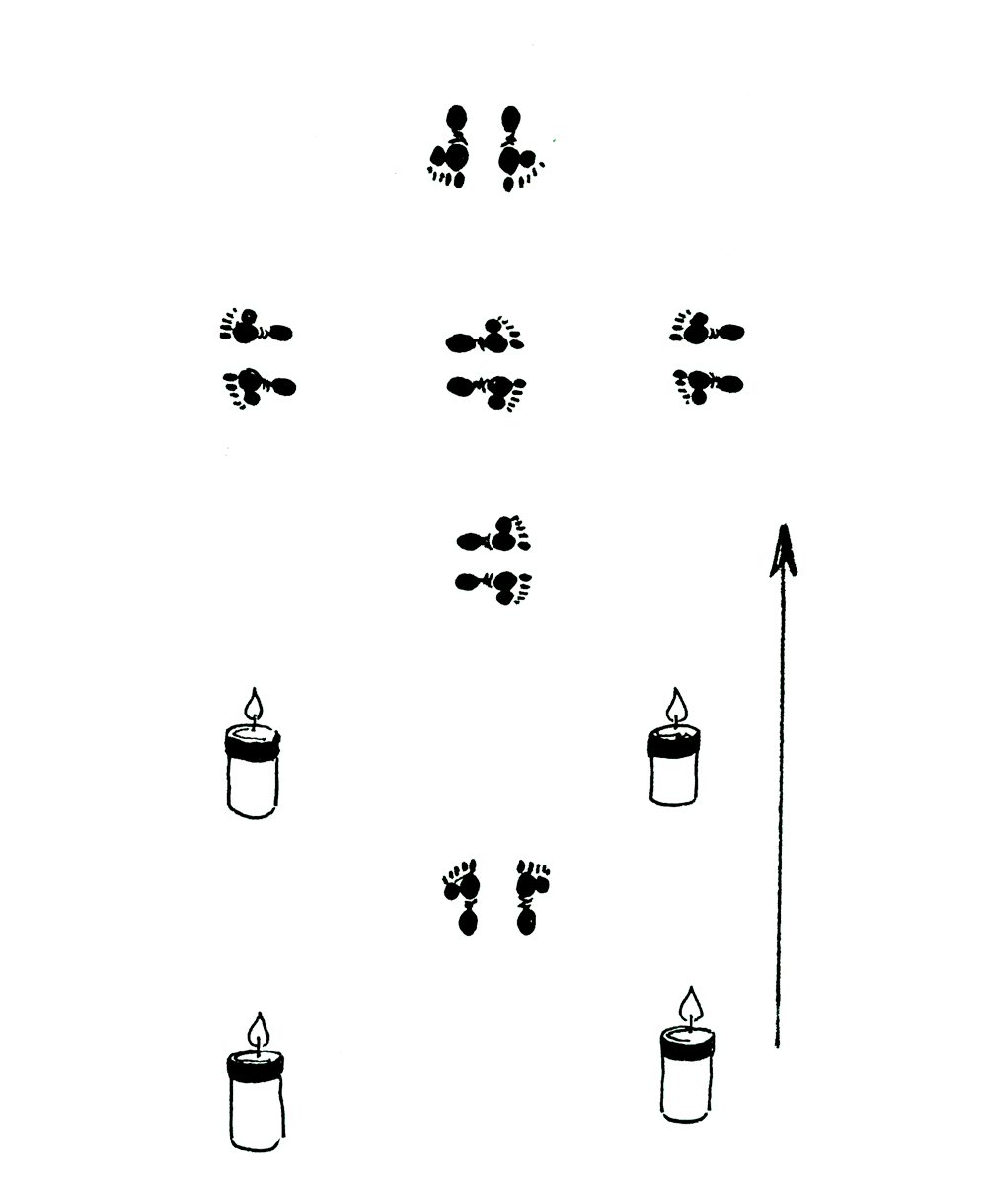
The Torches
The Torches are not part of the group of jumpers. They are two children and two adults who carry light to the Dance, walking on either side of the Tabaler. With their oil flames, they create the solemn and dark atmosphere of the procession.
Function within Dance
- They illuminate the path of the Dance and reinforce the atmosphere.
Characteristic movement
- Slow and measured walk, following the drummer.
Symbolism
- Torches that create natural light and accentuate the message of Death.
- Light as a weak life in the face of the inexorable darkness of death.
The illustrations that accompany this section are taken from the book " La Procesión de Verges " by Jordi Roca y Rovira (Cuadernos de la Revista de Girona, Diputación de Girona, 1986). All rights belong to their authors.