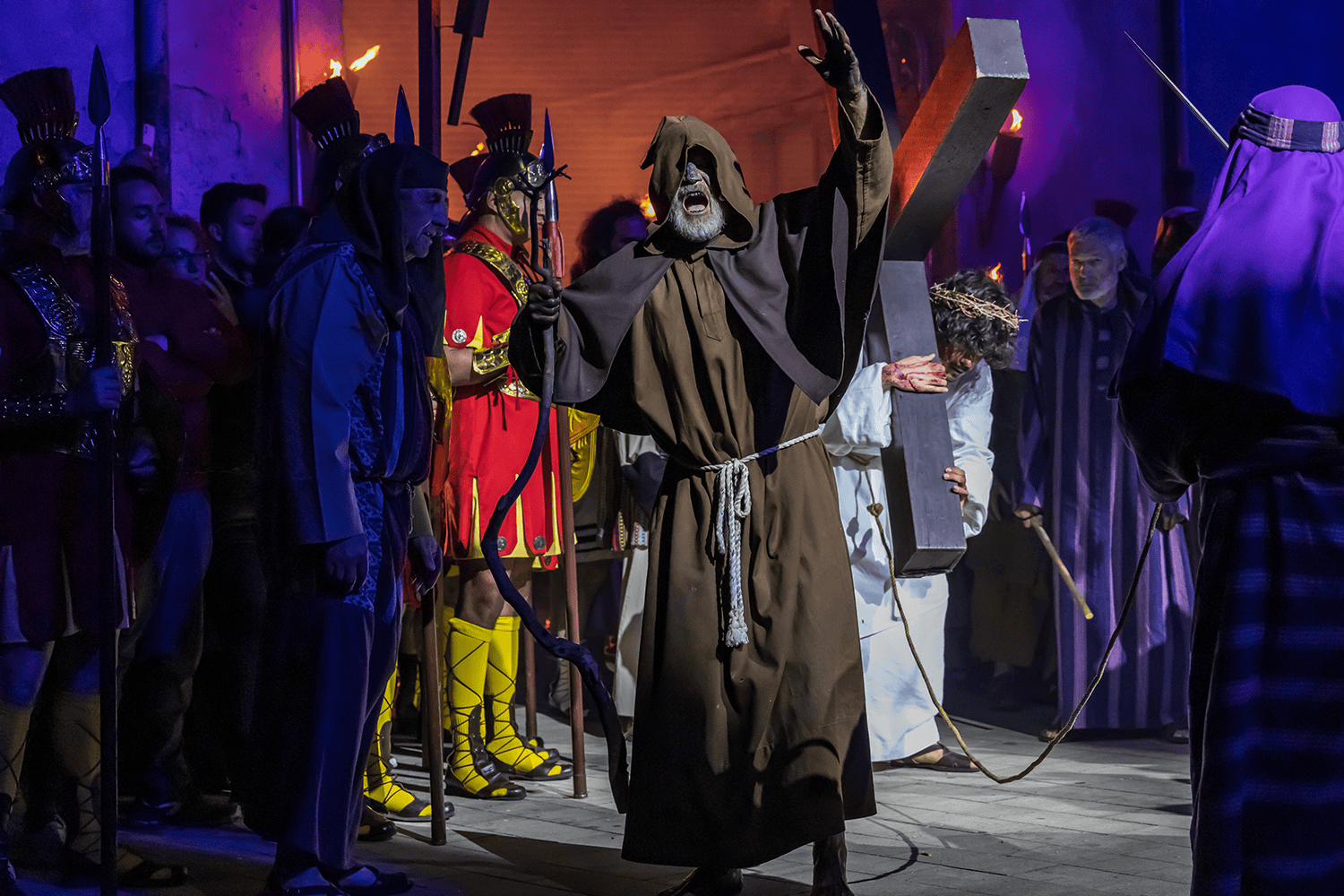
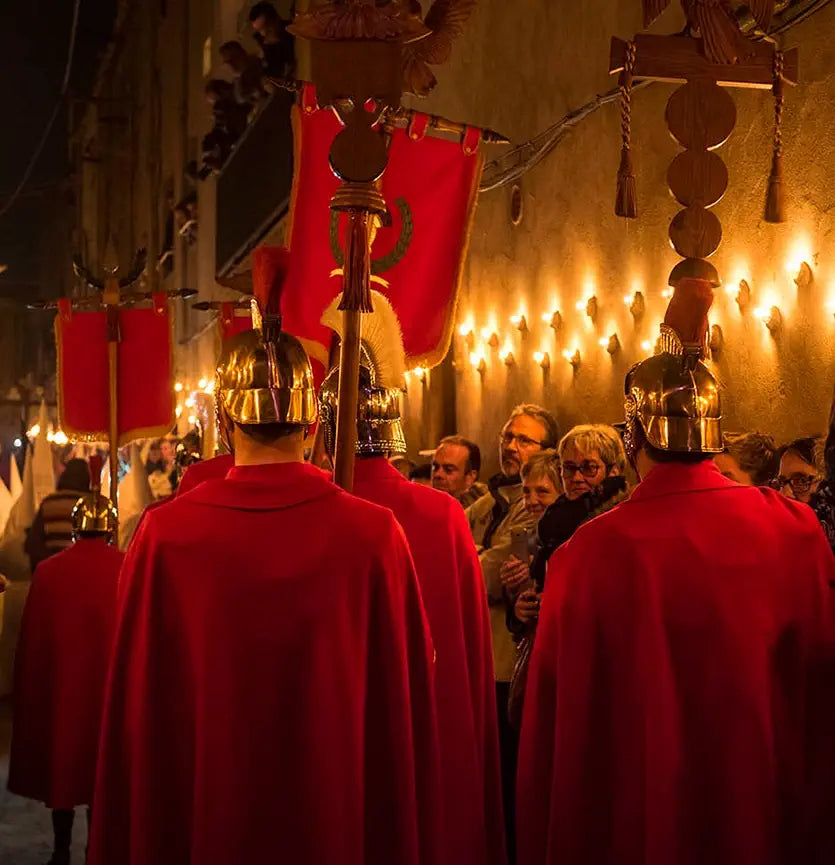
The procession begins to advance through the streets of Verges at midnight on Holy Thursday. The procession is made up of two types of figures: first, the mysteries or sculptural images, accompanied by their Nazarenes and musical group, and then the living figures. Among the living and static figures is the Dance of Death. The procession is led by the group of apostles and a blind man, as well as the cross of insults. Next comes the central figure of the procession: Jesus on the Cross, the group of Jews who whip him verbally and physically, and the manages who guard them. They, along with other characters who will join the procession (Veronica, the Samaritan Woman, the Three Marys, the Daughters of Jerusalem, etc.), star in the three spoken falls of the Via Dolorosa or Verges Way of the Cross.
Cross of Insults

The insults are the instruments with which Jesus was mocked, insulted, or reproached during the Passion: the nails driven into the cross, the rooster that crowed at St. Peter's denials, the lance of Longuinus, the crown of thorns, the whip of the scourge, etc. These insults hang from a cross carried by a penitent in a black vest and hood and remind the audience of the darkest moments of the Passion.

The Pilgrim

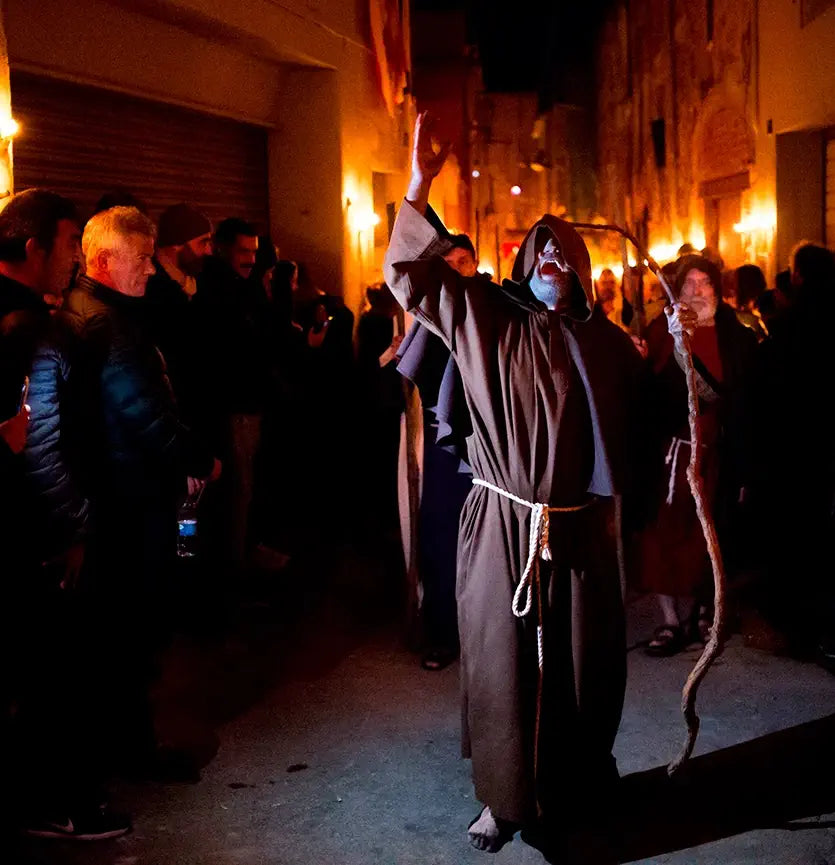
The Pilgrim or the Blind Man leads the procession and announces to the audience what is happening immediately before their eyes. This character has nothing to do with the story of the Passion, but rather represents the blind man who traveled the world announcing the plots of the oral literature known as Romances de Cec or Romances de Caña y Cordill. Until the 19th century, he was a beloved and eagerly awaited figure among the illiterate population, who could only consume stories through these storytellers, who were generally blind or disabled.

The apostles

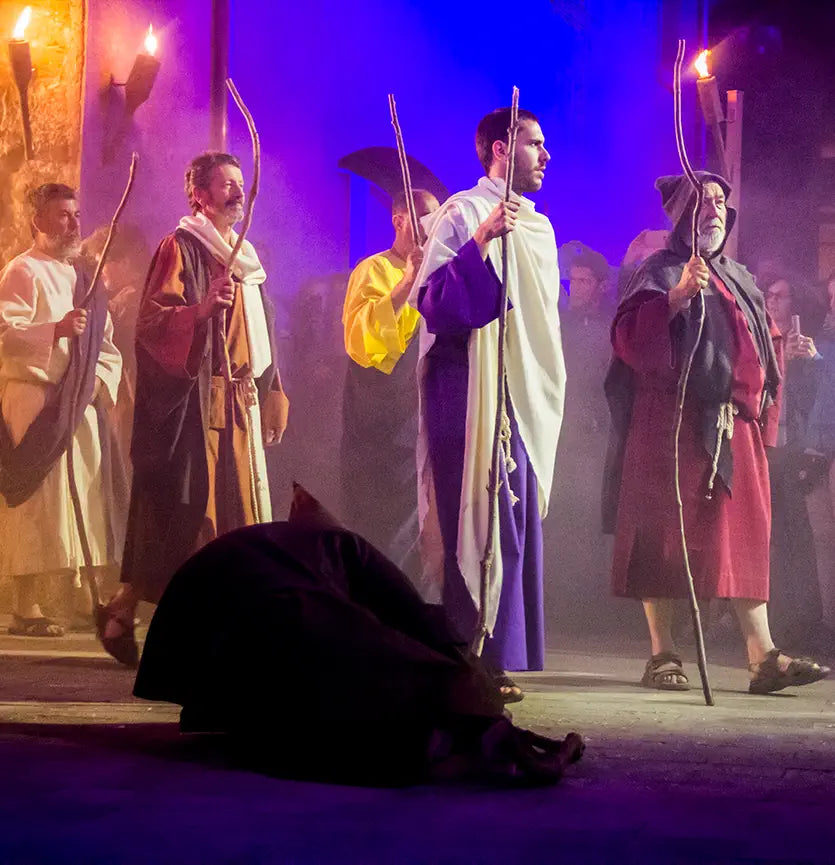
This is the first scene in the Procession. They represent the twelve apostles or disciples of Jesus: Peter, John, Andrew, James the Greater, James the Lesser, Philip, Bartholomew, Matthew, Thomas, Simon, Thaddeus, and Judas. They have starred in two of the scenes in the theatrical performance in the square, the Last Supper and the Garden of Gethsemane, and now they lead the processional procession. Ancient documents attest to their having conversations, being accompanied by Jesus, and praying the rosary during the procession. Today, they make no mention of them on the streets.

The Samaritan woman with little angels and white Nazarenes

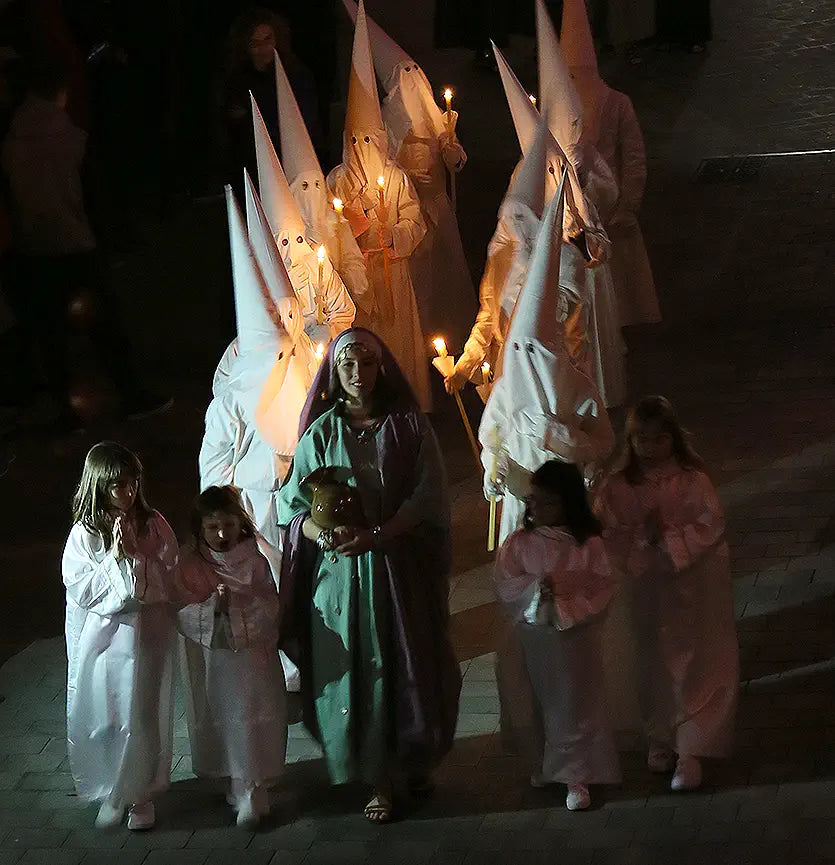
The Samaritan woman carries the water jug ​​in her hand, and the entire ensemble is a visual representation that reminds the viewer of the moment in Jesus' public life when he redeems the sinner. She is accompanied by little angels and white Nazarenes. Decades ago, she was added to the procession when it passed by the well where she met Jesus. Now, her staging takes place beforehand in the Plaza, and she joins the procession from the beginning.

Jesus on the cross with the Jews, the Jews, and the two thieves

The scene is composed of Jesus carrying the cross and a group of Jews who throughout the journey scold and whip him. Caiaphas leads the procession with his guard displaying the sentence. One of the Jews is Cyrene, a man whom the rest propose to help carry the cross in exchange for some coins because they fear that Jesus will not reach Calvary alive.

  • Veronica with little angels and white vestments

    Veronica represents a woman who takes pity on Jesus during the Via Dolorosa. She appears in the Procession during the first fall, when, as Jesus falls to the ground, she turns to him fearlessly, curses the Jews, and offers verses of comfort to Jesus as she dries the sweat and blood soaking his face.

  • The daughters of Jerusalem

    The Daughters of Jerusalem, popularly known as "the mourners," represent four women who publicly lament, during the second fall, the injustice committed with the condemnation of Jesus and the disgrace this represents for the Virgin Mary.

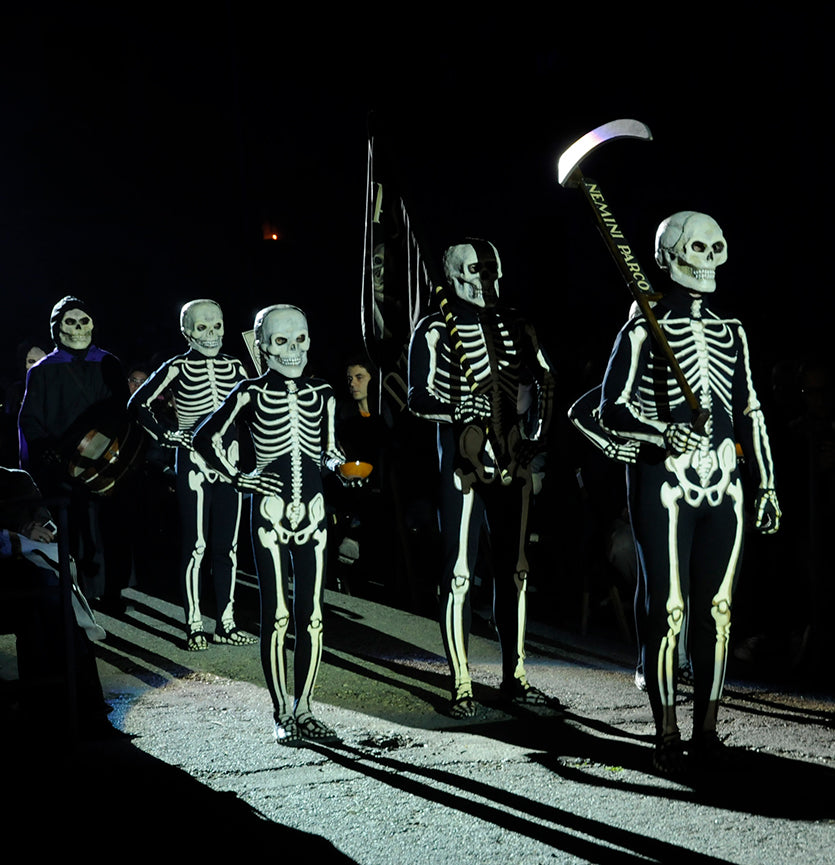
The Dance of Death

Discover all its members and their symbolism

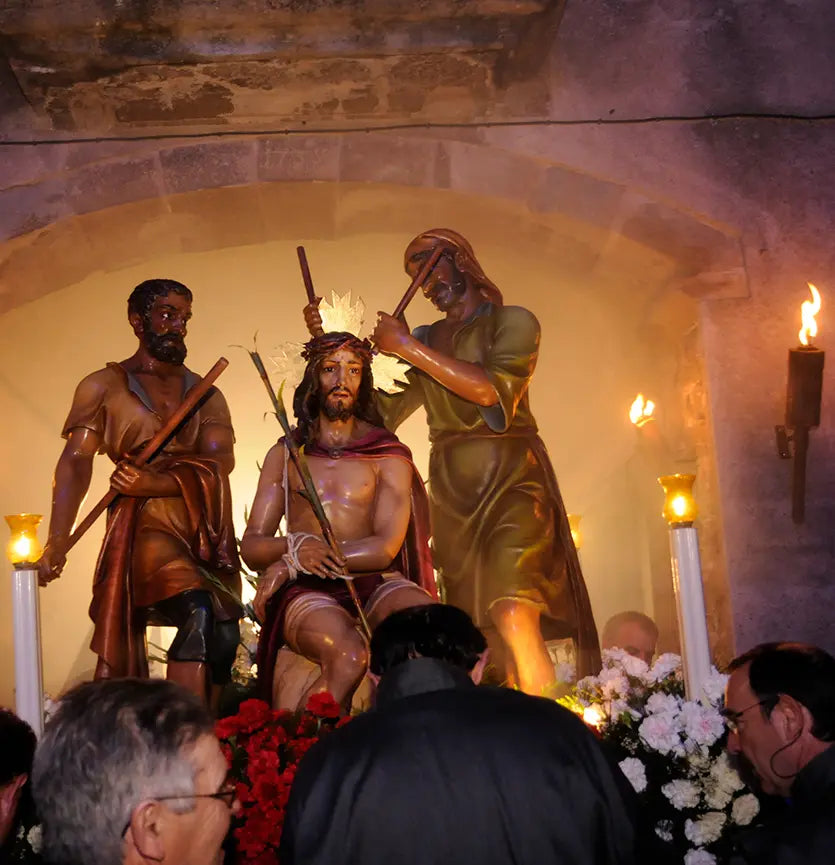
The Scourge with Grey Nazarenes

The Scourge is the first of the five images and represents the scourging of Jesus as punishment for proclaiming himself the Son of God. This image in Verges is popularly known as the Pistolets (the pistols) because the two scourges who whip Jesus resembled two brothers from a family in Verges. The image is accompanied by a group of gray Nazarenes.

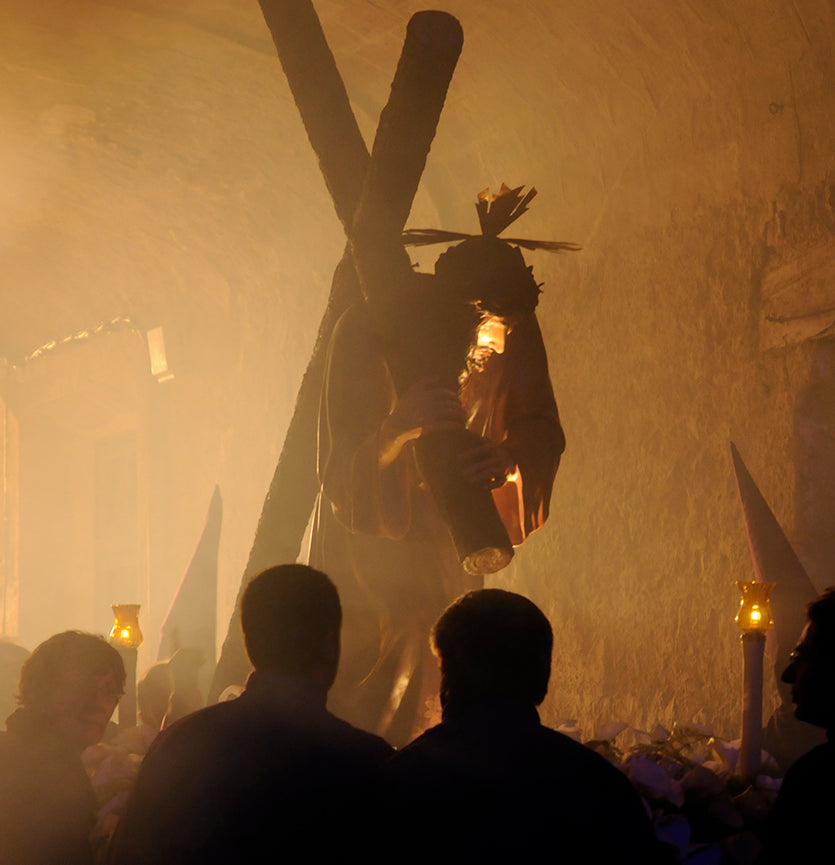
Nazarene with lilac Nazarenes

Secondly, we find El Nazareno (The Nazarene). It is the image of Jesus carrying the cross on his shoulders as he ascends Calvary. For several decades, it had been kept in a chapel in a private home and from there it was carried in the Holy Thursday procession. The color of the Nazarenes who accompany him is purple.

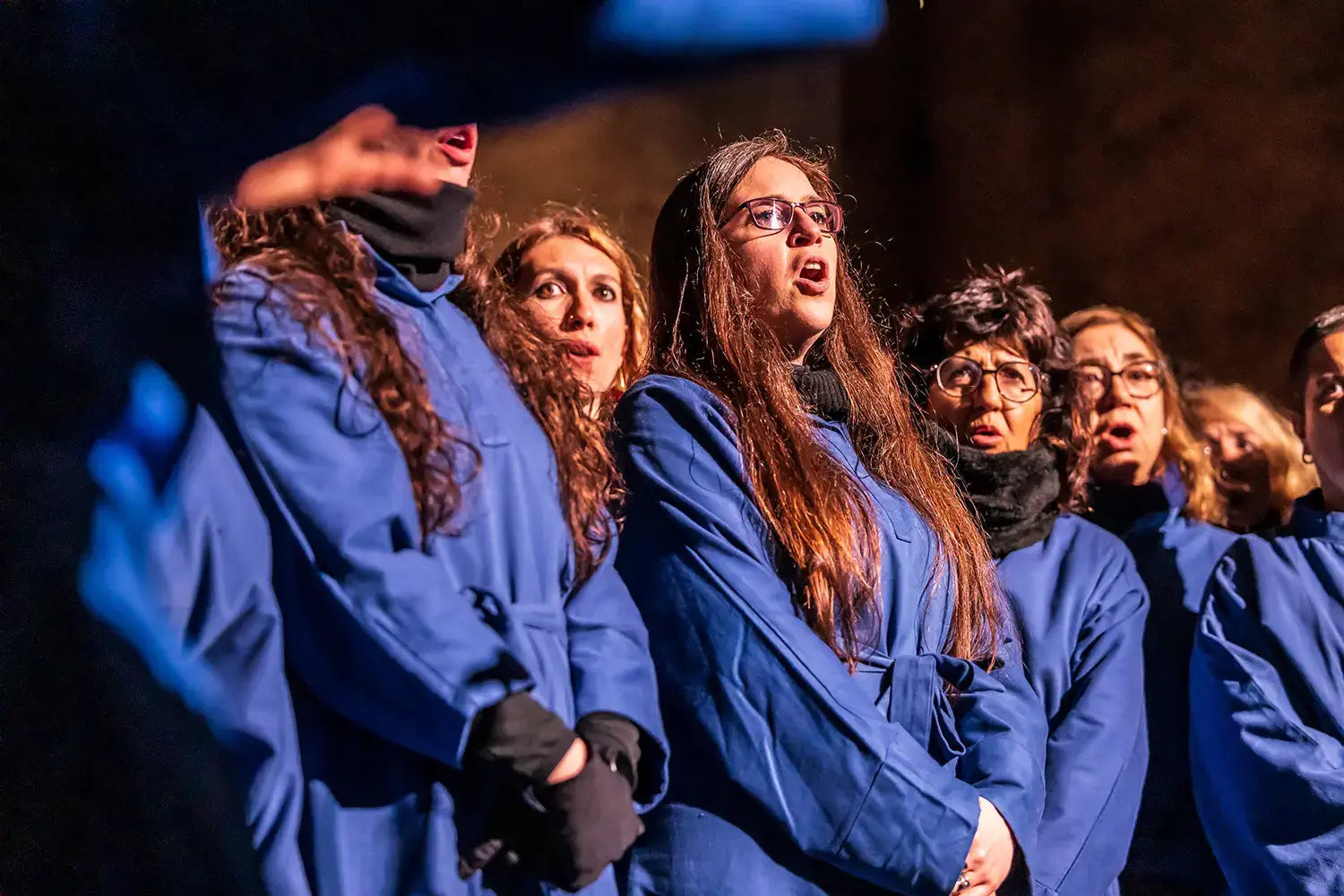
The Stabat Mater Choir

The Stabat Mater choir is held immediately in front of the image of Our Lady of Sorrows. It is a polyphonic choir made up of a small instrumental group (two transverse flutes and a flugelhorn) and a group of men and women who sing a Stabat Mater, of unknown authorship, at each stop.

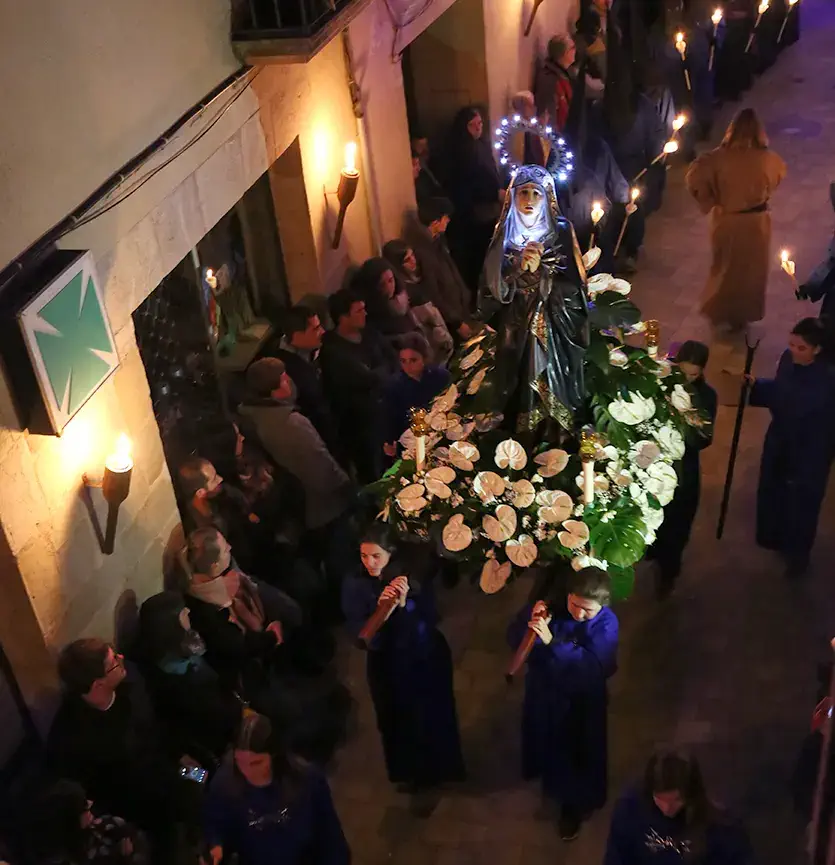
Our Lady of Sorrows with blue Nazarenes

The Virgin of Sorrows is the only image on a platform carried on shoulders. It is carried entirely by women, in two groups of four who alternate throughout the procession. The dresses of the bearers and the Nazarenes who accompany them are blue. The bearers' outfits bear a pin with the seven glavios stuck in the Virgin's heart.

The Pity with black Nazarenes

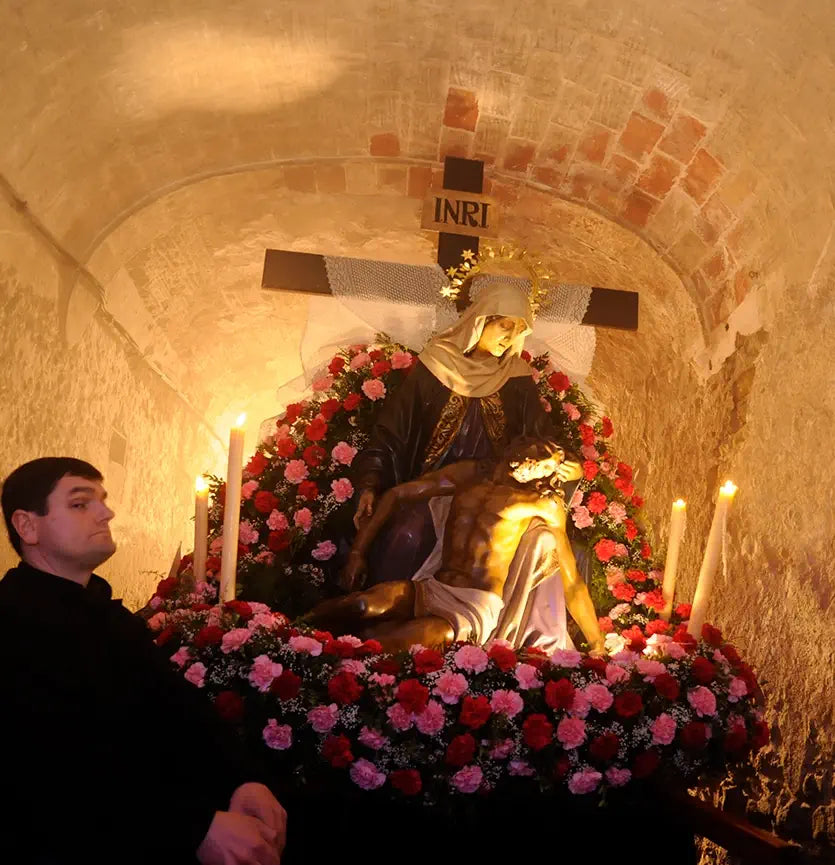
The fourth image is The Pietà, a plaster sculpture depicting the cross with Mary seated at its foot and the dead Jesus on her lap. Interestingly, the lace sheet hanging from the cross was handmade by a local girl decades ago, and she spent a good part of her life making it. The distinctive color of the Nazarenes who accompany her and the group is red.

Saint Christ with red Nazarenes

The Holy Christ closes the procession, preceded by the marching band. This image is carried in the Catalan style by bearers who stand high so that the image never touches the ground. The entire group, including the Nazarenes, maintain the red color of the Brotherhood of the Blood, which was responsible for organizing the procession centuries ago.