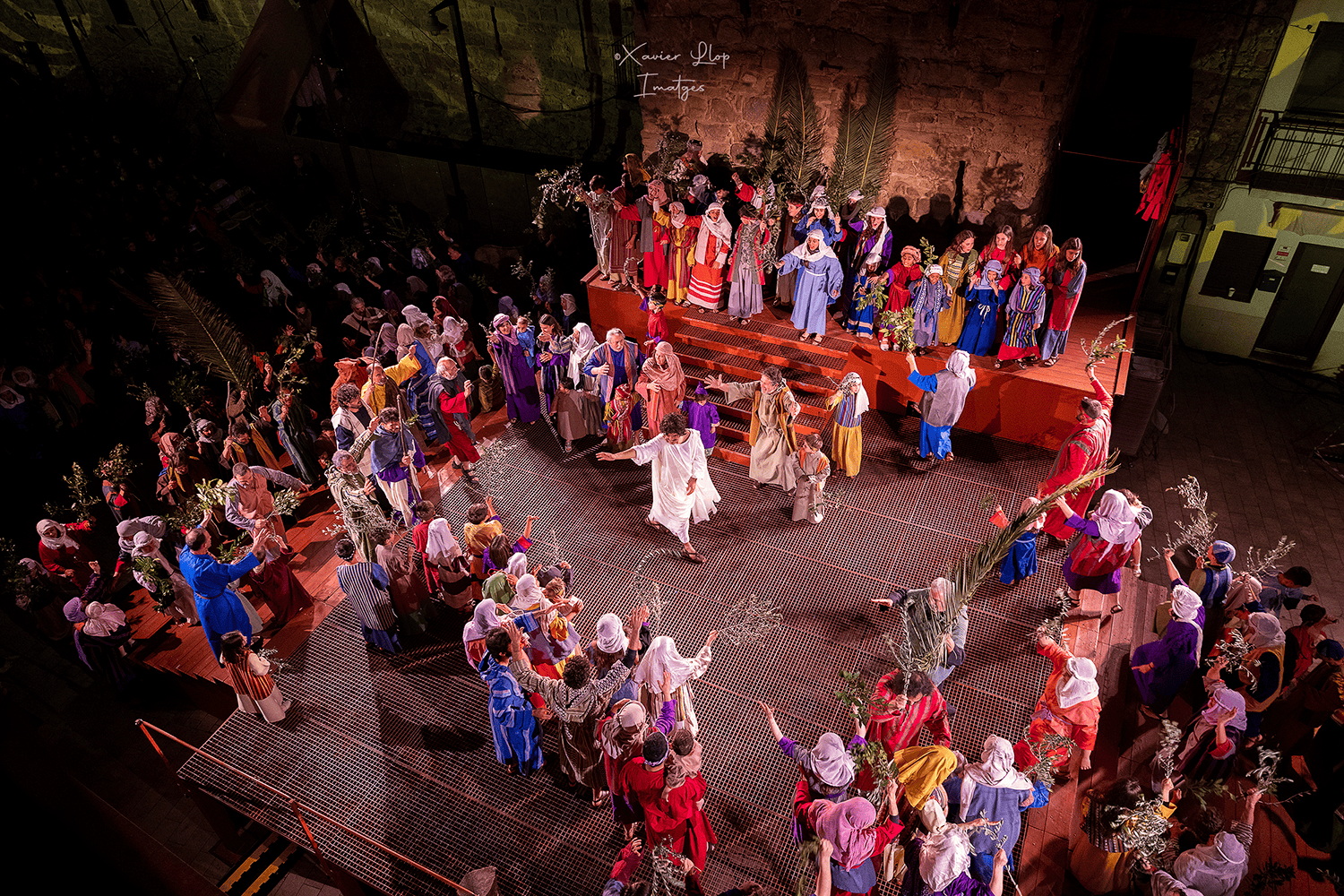
Just before the days of the Passion, Jesus is acclaimed as the Savior, the Messiah, by a great crowd in Jerusalem. Despite this, he does not lose his humility, entering the Holy City not as a king with his retinue, but on a donkey, surrounded only by his disciples and common folk.
This scene recreates the triumphant entry of Jesus into Jerusalem, where he is welcomed by the crowd with palms and shouts of “Hosanna.” Fragile leaves of laurel, olive, and palm delicately fill their hands, and the eyes of the multitude shine with a joy that gives wings to their feet.
The entrance of the participants is spectacular, coming from all the paths that lead to the square, transporting us to the paradise of time. The Hosanna rings out clearly, rising to the heavens, propelled by a polyphony that invents the infinite of love.
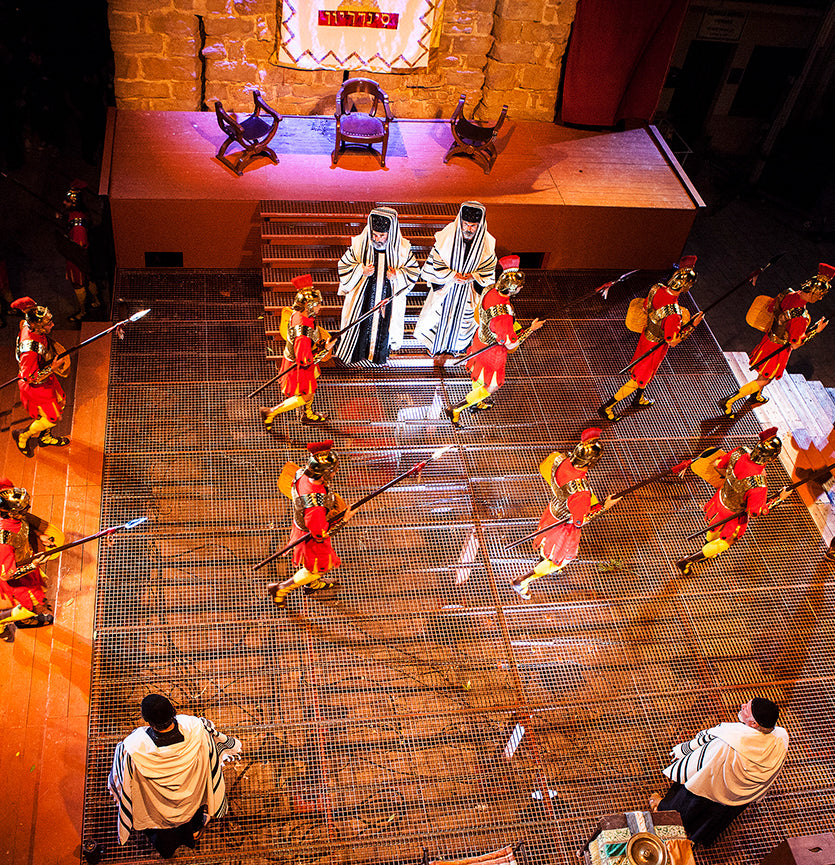
Immediately after the scene of the Sanhedrin, during which Jesus is sentenced to death, the Dance of Death makes its appearance in the square. Like a premonition of what is to come, the five dancers make a solemn entrance, crossing the square from one end to the other.
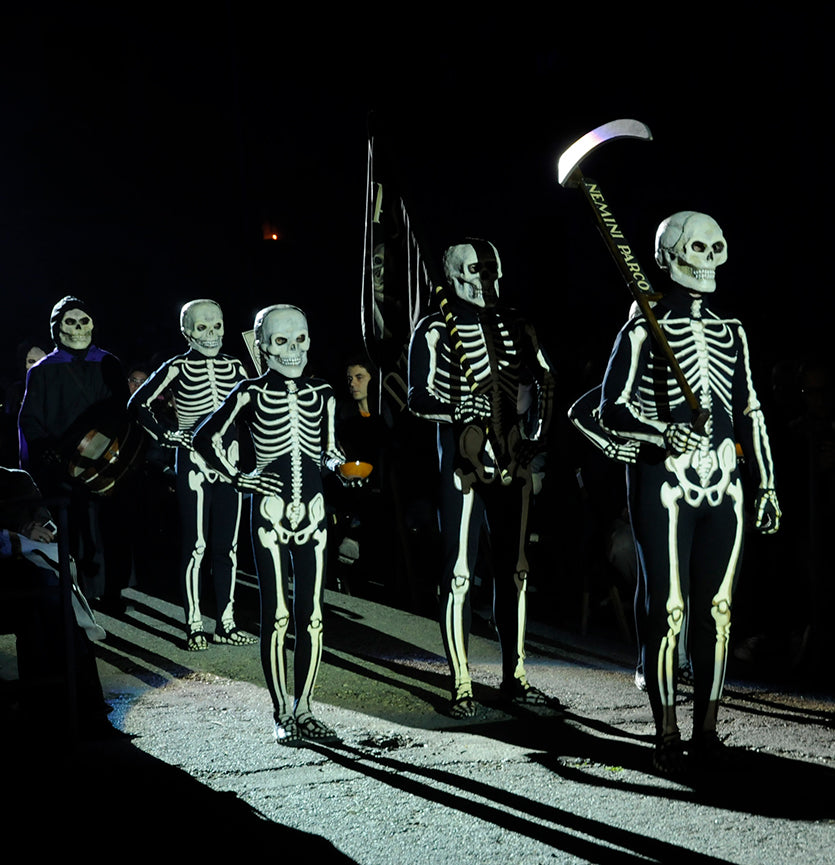
The Dance of Death
Discover Its Members and Symbolism
After the Dance of Death, the scene of the Garden of Gethsemane is enacted. Jesus is shown in prayer among the olive trees in Gethsemane. He is accompanied by the apostles Peter, John, and James, who are peacefully asleep nearby, while he endures the anguish of his imminent death.
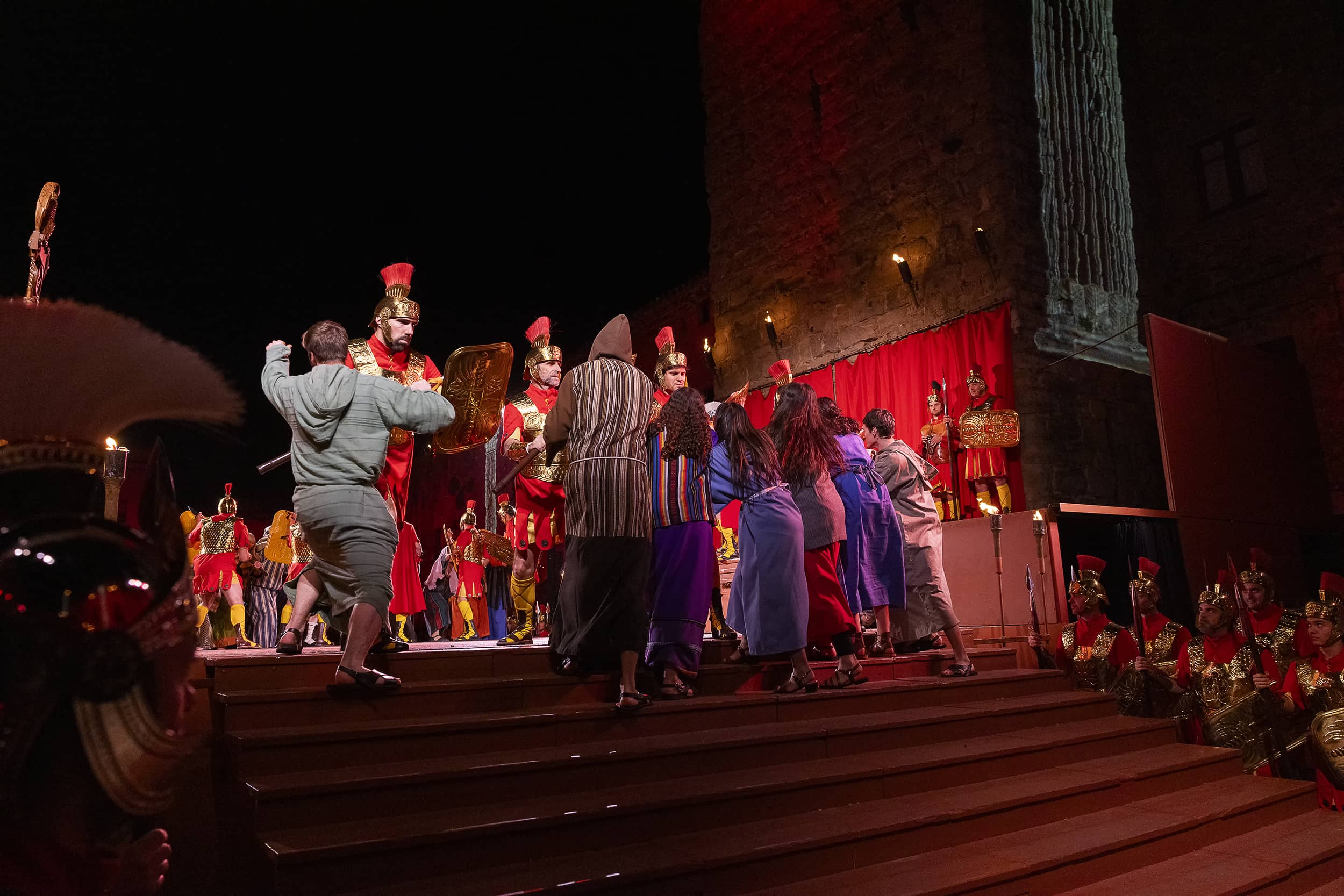
An angel appears to him, announcing the Passion he is about to suffer. Once resigned to his fate, Jesus steps forward of his own will to the group of Jews who have come to arrest him. Struck by his bravery, they fall back in astonishment.
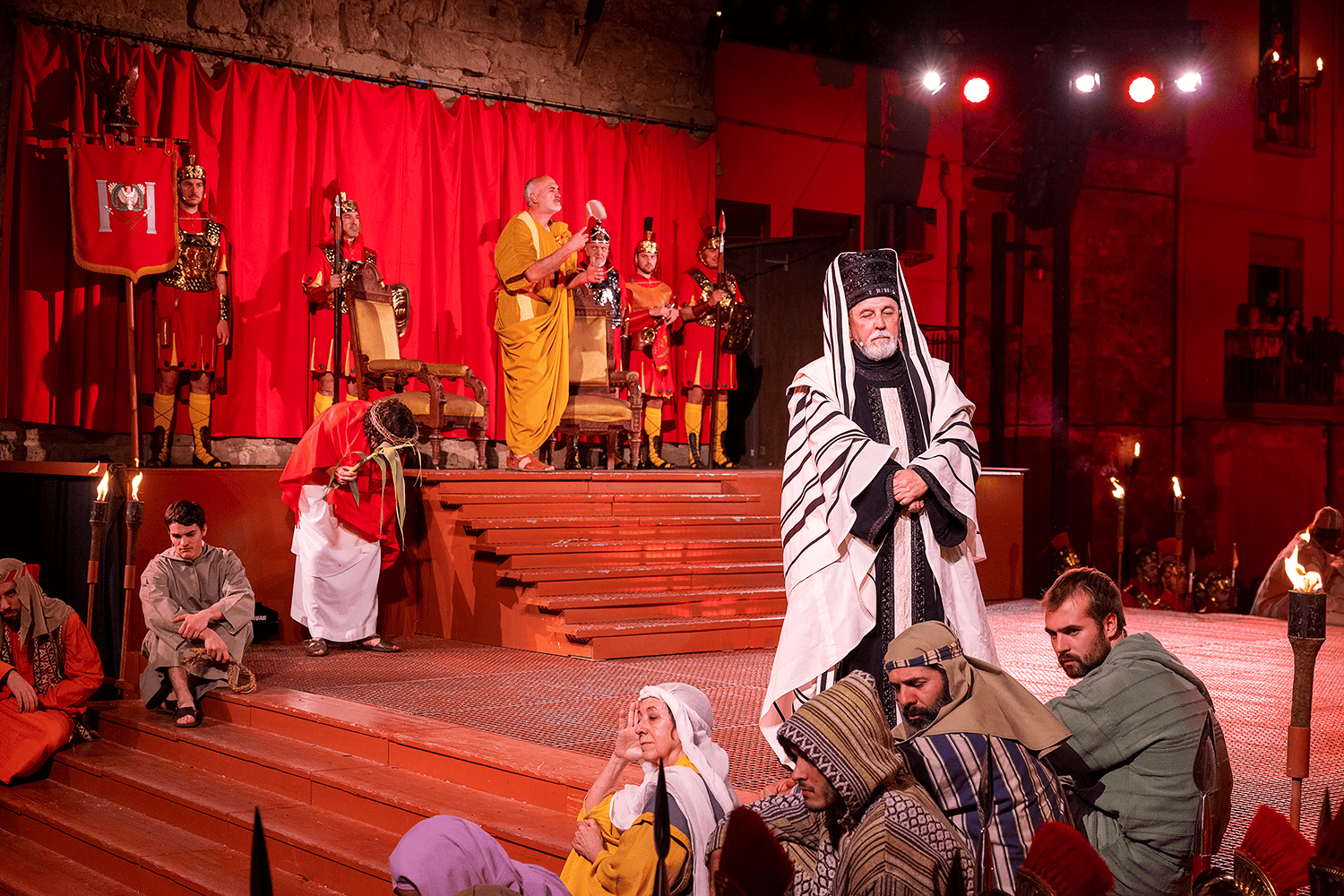
Pontius Pilate
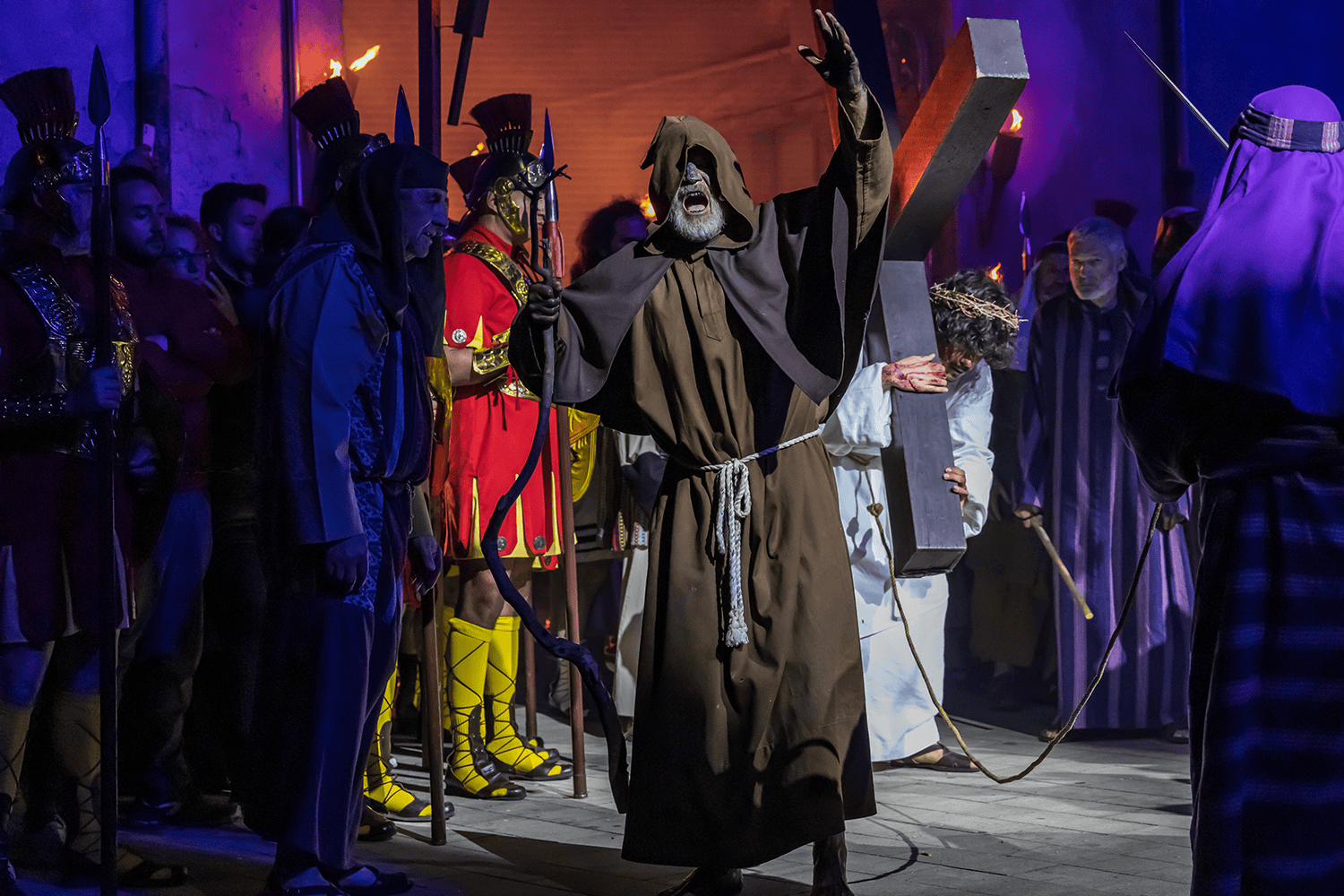
Once Jesus is condemned to crucifixion, the cross is raised above the platform. The scene ends with great emotional intensity as the Jews place the cross on Christ’s shoulders, forcing him to carry it along the Via Dolorosa, amid harsh insults, beatings, and mockery.
This tableau marks the conclusion of the Passion play in the Main Square.
Once condemned to crucifixion, the cross is raised above the platform. The scene reaches a powerful emotional climax as the Jews place the cross on Christ's shoulders and parade him along the Via Dolorosa amid harsh insults, assaults, and mockery. This tableau marks the conclusion of the Passion play performed in the Main Square.